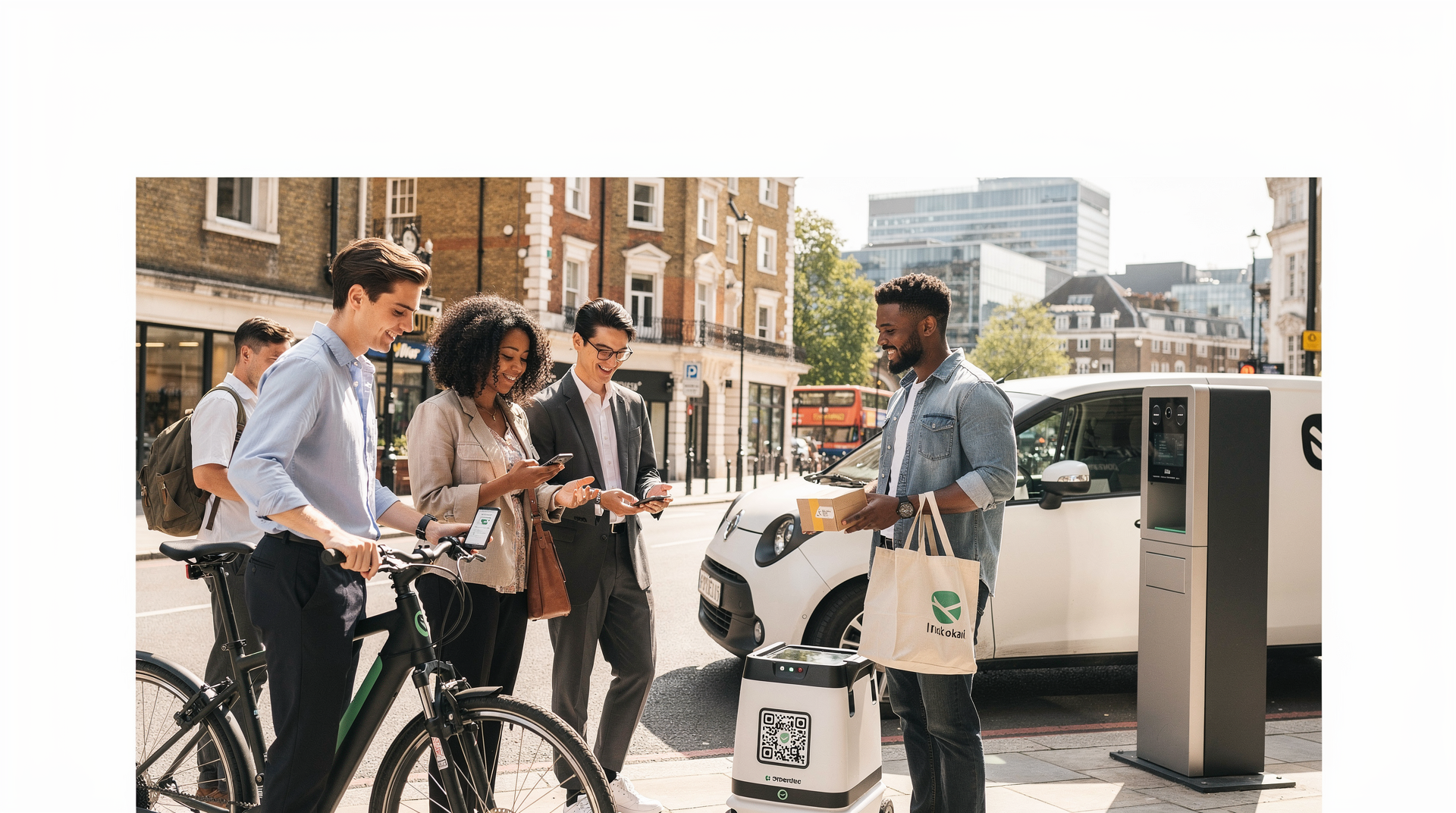
The most interesting UK startups right now are not just building faster software or shinier gadgets. They are targeting everyday friction points — how we eat, travel, work, shop, and manage our health — and turning small improvements into habits people actually keep. Having spent the last decade watching London’s tech scene evolve from a handful of co-working spaces into a genuinely global launchpad, I’ve seen how the companies that last are rarely the ones that shout loudest. They’re the ones that quietly remove a step you used to dread.
This guide maps the UK early-stage startup landscape by maturity level, so you can see what tends to emerge first, what becomes important as a company grows, and how to judge whether a startup is genuinely changing daily life or simply sounding ambitious. The lens is practical: not just what founders pitch, but what users actually adopt and keep using.
What “redefining daily life” really means in startup terms
A startup earns that label when it changes a repeated behaviour, not when it launches a clever product once. In practice, that usually means one of four things:
- it saves time on a task people do every day;
- it reduces cost or waste in a routine activity;
- it makes a previously annoying process feel simple;
- it nudges a large group of users into a new habit.
For UK founders, this matters because the market is both promising and unforgiving. British consumers are famously quick to adopt useful convenience products — look at how contactless payments and online grocery became second nature — but they are also sensitive to price, trust, delivery reliability, and whether a product fits real UK life rather than a generic global template. A Californian approach that assumes everyone drives everywhere and tips 20% will fall flat in Manchester or Glasgow. The winners localise intelligently, often starting with a painfully narrow use case that a multinational would overlook.
A practical way to think about startup maturity
Early-stage companies often move through recognizable stages. The criteria that matter at each stage are different, and that is where many observers get it wrong. I’ve seen investors fixate on revenue when the real story is retention, and journalists declare a startup “the next big thing” based on a slick demo with no evidence anyone uses it twice.
| Stage | What the company is trying to prove | What to look for | Main risk |
|---|---|---|---|
| Idea / pre-seed | The problem is real | Clear user pain, strong founder insight, early prototypes | Building something nobody needs |
| Seed | People will use it repeatedly | Early retention, first revenue, repeat usage | First-time curiosity instead of habit |
| Series A | The model can scale | Unit economics, operational discipline, channel fit | Growth that is too expensive |
| Growth | The company can expand without breaking trust | Brand strength, support quality, resilience | Complexity outrunning product quality |
If you only look at hype, you miss the real story. At the earliest stages, a startup is mostly a bet on insight — can the founders see a problem others have normalised? Later, it becomes a bet on execution. I’ve lost count of how many beautifully designed health apps I’ve deleted after a week because the core loop wasn’t sticky enough. The table above is deliberately blunt because the London startup circuit is littered with companies that aced the press coverage but failed the habit test.
The daily-life categories where UK startups are making the biggest impact
1. Health and wellbeing
This is one of the clearest areas where early-stage startups affect everyday life, because health decisions happen repeatedly and often under time pressure. From booking a GP appointment to tracking chronic symptoms, the NHS backlog has created fertile ground for digital triage and preventive tools — but only if they respect how people actually behave.
Common themes include:
- faster access to guidance;
- digital-first triage and monitoring;
- preventive tools that encourage healthier routines;
- products that reduce friction in booking, tracking, or follow-up.
What matters at seed stage is not whether the app looks polished. It is whether users come back after the first interaction. A one-off check-in is useful; a repeat behaviour is business-defining. I recently tested a mental wellbeing app that had gorgeous illustrations but asked me five minutes of onboarding questions before delivering any value. I never opened it again. The startups that win here embed themselves into existing rituals — pairing a morning coffee with a one-tap mood log, for instance — rather than demanding a separate “wellness session.”
Typical mistake: founders overestimate how much people want to manage their health inside yet another app. The winning products usually fit into existing behaviour rather than demanding a new one.
2. Personal finance and budgeting
UK consumers are highly attuned to value, which makes finance startups especially relevant when they help people see, save, or move money more clearly. With inflation squeezing household budgets, tools that surface spending patterns or automatically switch bills aren’t just nice-to-haves — they’re becoming survival kit for many.
The strongest early-stage products usually focus on:
- simpler budgeting;
- spending visibility;
- bill management;
- fairer access to credit or savings tools;
- reducing the mental load of money decisions.
At this stage, trust is the product. A finance startup can have elegant design and still fail if users do not believe it is secure, transparent, and easy to exit from. I’ve watched several open banking-powered apps launch with impressive dashboards, only to stall because the permission request felt intrusive and the value wasn’t explained in plain human terms. British users, in particular, will abandon an app the moment they sense it’s doing something clever with their data that they didn’t explicitly ask for.
Important UK nuance: open banking has made certain data-driven experiences easier to build, but it has not removed the need to explain the product in plain English. If users cannot understand the value in under a minute, conversion tends to suffer.
3. Food, grocery, and household convenience
These startups are often overlooked because the product category looks ordinary. In reality, this is where daily life is most visible. The weekly shop, the what’s-for-dinner panic, the pile of packaging waste — these are routines that, if improved even slightly, unlock disproportionate loyalty. Just look at how quickly recipe-box services became part of the furniture for time-pressed families.
The common focus areas are:
- easier meal planning;
- subscription models that actually match usage patterns;
- smarter grocery replenishment;
- reducing household waste;
- localised delivery and logistics improvements.
The question investors and users should both ask is simple: does this save enough time or effort to become a habit? Food is crowded, so convenience alone is not enough. The product must solve a very specific, repeatable pain. A startup that merely offers another way to order takeaway is unlikely to stick unless it cracks the 7 p.m. “I can’t face cooking” moment better than anyone else. The ones worth watching often emerge around dietary needs, bulk-buying clubs, or ultra-local supply chains that supermarkets can’t replicate.
4. Work tools for small teams and solo professionals
Many people think “daily life” means consumer apps only. In reality, work software now shapes daily routines as much as consumer products do. The pandemic permanently blurred the line between home and office, and the explosion of freelancers, micro-agencies, and remote teams means a calendar or task manager is just as much a “daily life” product as a fitness tracker.
The best early-stage UK startups in this area often target:
- task overload;
- meeting fatigue;
- document handling;
- workflow automation;
- collaboration for small distributed teams.
The quality test is not feature count. It is whether the tool removes a whole step from someone’s day. If it only adds dashboards and notifications, it is probably creating friction rather than removing it. I’ve watched tiny teams fall in love with a tool that silently auto-organises their chaotic email attachments into project folders, precisely because it eliminated a tedious 15-minute chore. That’s the bar: subtraction, not addition.
5. Mobility and urban living
In UK cities, even small improvements in commuting, parking, parcel handling, or local transport can reshape the day. A ten-minute saving on a daily commute adds up to over 40 hours a year — effectively an extra working week of free time. No wonder mobility startups generate intense loyalty when they get it right.
Promising startups often work on:
- transport planning;
- shared mobility;
- EV charging access;
- urban delivery optimisation;
- neighbourhood-level services.
These companies face a harder path than software-only startups because they often depend on physical infrastructure, regulation, or partnerships. That means early traction can look slower, but the moat can become stronger if the model works. Consider the difficulty of negotiating kerbside access with local councils versus launching a SaaS dashboard; the former is a scalable headache that competitors will struggle to replicate. The mobility startups I’m most curious about are those layering AI prediction onto last-mile logistics — not just moving things faster, but knowing where demand will spike before it does.
How to judge whether a startup is actually useful
A startup that “redefines daily life” should usually pass at least three of these checks:
- it solves a problem that happens often;
- the user understands the value quickly;
- the product creates repeat usage, not just curiosity;
- switching away would be inconvenient once adopted;
- the benefit is visible in time, money, or stress saved.
If a company cannot explain its value in a single ordinary sentence, that is often a warning sign. Good products are easy to describe because the benefit is concrete. I’ve sat through founder pitches where the elevator pitch itself needed unpacking; almost always, those products struggled to find a foothold. The most resilient startups I’ve covered could be sketched on the back of a napkin — e.g., “it’s like having a personal bookkeeper who texts you before you overspend.”
The founder signals that matter most at early stage
At this point, the company is often still too young for perfect financials. So you need to read the founders carefully. In the UK ecosystem, where capital is more conservative than in Silicon Valley, founder credibility often hinges on demonstrated obsession with a specific user problem rather than grand visions.
Look for:
- direct experience with the problem;
- evidence they have spoken to real users — and can recount what surprised them;
- a narrow starting point rather than an everything-app;
- enough technical or operational depth to ship quickly;
- the ability to adapt without losing the core idea.
In the UK, strong founders often win by being unusually clear about the customer and the use case. Ambition matters, but focus usually matters more in the first 18–24 months. I’ve seen startups pivot too early because a single enterprise client dangled a large contract, diluting the product before it had a chance to build consumer habit. The founders who hold their nerve — refining for a specific, recurring pain — tend to build the scaffolding for something enduring.
A simple stage-by-stage checklist for readers and analysts
If the startup is very early
- Is the problem specific and frequent?
- Do the founders understand the user better than competitors?
- Is there a prototype or early demo that matches the promise?
- Has anyone outside the team used it and come back?
If the startup is starting to gain traction
- Are users repeating the behaviour — and how quickly?
- Is growth coming from a believable channel, not just a one-off PR spike?
- Does the product feel simpler over time, not more confusing?
- Are support issues manageable without founder intervention on every ticket?
If the startup is scaling
- Can the business grow without lowering trust or quality?
- Are operations strong enough for real-world demand spikes?
- Is the team still close to the customer, or are they drifting into boardroom abstractions?
- Does the company still solve the original pain, or has feature creep diluted the core value?
Common mistakes UK consumers and observers make
- Confusing a nice demo with a durable product. A smooth Figma prototype is not a business.
- Assuming a startup is valuable because it is “AI-powered” or “mobile-first” — labels that now mean almost nothing.
- Ignoring whether the product fits UK regulations, delivery norms, or consumer behaviour. Something that works brilliantly in Texas may collapse under GDPR and British weather.
- Overrating user acquisition and underrating retention. A million downloads means little if 90% of users never open the app a second time.
- Treating category size as more important than frequency of use. A huge market with low interaction frequency rarely changes daily routines.
The most practical question is always: Will this become part of someone’s weekly routine? If the answer is no, the startup may still succeed, but it is less likely to change daily life.
Where the strongest opportunities are heading next
The next wave of UK startups redefining everyday routines is likely to sit at the intersection of:
- AI and personal assistance — moving beyond chatbots to agents that actually complete tasks, like rebooking a delayed train or negotiating a bill;
- health and prevention — shifting from reactive sick care to continuous, low-friction wellness nudges;
- financial simplification — tools that don’t just show you a graph but actively take a sensible action on your behalf;
- local logistics and urban services — micro-fulfilment and predictive routing that shrink delivery windows;
- tools that reduce admin for consumers and small businesses — automating the paperwork that quietly eats hours every week.
The pattern is clear: the best companies do not simply add technology to a familiar process. They remove a step, reduce uncertainty, or make the next action obvious. In a cost-of-living crunch, that instinct for subtraction is more valuable than ever.
How to spot a startup worth watching before everyone else does
Use this quick framework — a mental checklist I return to whenever I’m sifting through the hundreds of early-stage pitches that cross my desk:
- Pain: Is the problem annoying enough that people already try to solve it, even with makeshift workarounds?
- Frequency: Does it happen often enough to form a habit — weekly at minimum, daily is ideal?
- Clarity: Can the product be explained without jargon? If you stumble explaining it to a friend, the startup probably hasn’t nailed it yet.
- Retention: Do users return because the product stays useful, or does engagement nosedive after week one?
- Feasibility: Can the company deliver the experience reliably in the UK market, accounting for infrastructure, regulation, and the British consumer’s low tolerance for friction?
If a startup scores well on all five, it is worth close attention even if it is still small. Some of the most impactful companies I’ve tracked started with a few hundred obsessive users in a single postcode.
FAQ
What makes a UK startup “early-stage”?
An early-stage startup is usually still proving product-market fit, customer demand, and a repeatable business model. At this point, the focus is less on scale and more on learning quickly from real users — and on being honest enough to kill a feature that isn’t working, rather than dressing it up with vanity metrics.
Which sectors are most likely to affect everyday life?
Health, personal finance, food convenience, work tools, and urban mobility tend to have the most direct impact because they touch daily routines repeatedly. The common thread is frequency: if a product only matters once a month, it rarely rewires behaviour.
Why do so many early-stage startups fail to scale?
Common reasons include weak retention, unclear value, high customer acquisition costs, and products that solve a problem too rarely to become a habit. I’d add a UK-specific factor: startups that don’t adapt to local expectations around support, transparency, and pricing often hit a ceiling well before the numbers suggest they should.
How can a reader tell if a startup is genuinely useful?
Look for repeated usage, a simple explanation of value, visible time or money savings, and evidence that users would miss the product if it disappeared. The acid test is imagining a power user’s Tuesday without it; if nothing would change, the product is decorative, not essential.
Are UK startups different from US startups?
Often, yes. UK startups usually need to be more precise about regulation, pricing, and practical fit for local consumers, especially in finance, mobility, and health. The market is also less forgiving of hype without substance — British users have a well-calibrated scepticism that rewards clarity over grandiosity.
What matters most is not whether a startup sounds futuristic, but whether it improves a routine in a way people actually keep using. The companies worth watching are the ones that make ordinary life noticeably easier, then prove they can do it consistently. And if there’s one thing I’ve learned tracking this ecosystem from a London desk, it’s that a deceptively simple idea, executed relentlessly, will almost always outlast a clever one that never quite fits into a Tuesday afternoon.