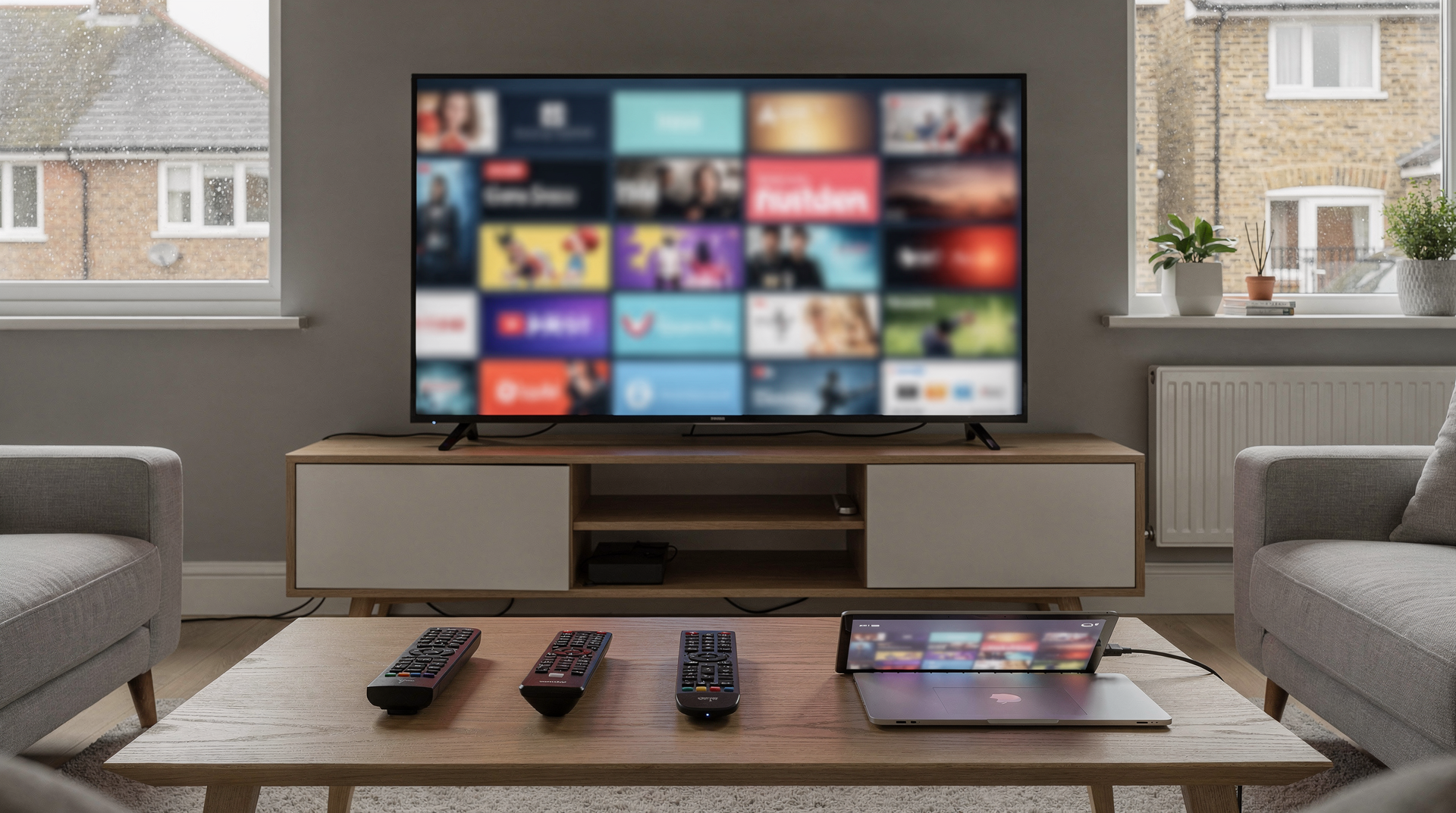
By 2026, the UK streaming market has shed the fantasy that a single service can do it all. The real conversation is no longer about finding the platform—it’s about matching a set of tools to how you actually watch: live sport, prestige drama, family viewing, box-set binges, or a deliberate rotation of monthly subscriptions. Value increasingly lives in the combination of one or two core services with short-term sign-ups to others, rather than keeping every app active all year. The households that get this right are the ones quietly saving hundreds of pounds while still watching everything that matters.
How to judge “value” in streaming, not just price
A low sticker price doesn’t automatically mean good value. The metric that actually matters is useful viewing per pound—once you factor in content quality, ad load, simultaneous streams, offline downloads, and whether a platform nudges you into a higher tier just to unlock the features you need.
A practical lens for judging any service comes down to four questions:
- Content fit: does the platform regularly release programmes you genuinely want to watch, or are you scrolling past the same titles every month?
- Monthly flexibility: can you pause, cancel, or rotate without penalty, or does the service lock you into a cycle that’s hard to break?
- Household use: how many people watch at once, and on how many devices—does the base plan actually cover your real-world setup?
- Total cost: does the advertised price hold once you add ad-free viewing, extra members, or premium sport, or does the true monthly bill quietly inflate?
This framework matters because UK streaming habits have matured. Most households no longer need every major service running concurrently. Instead, they benefit from timing subscriptions around launches, finales, and sporting seasons—a shift that turns streaming from a fixed utility into a flexible, intentional spend.
The main UK streaming services and where they fit
| Platform | Best for | Typical value profile | Main caveat |
|---|---|---|---|
| Netflix | Broad entertainment, originals, varied household viewing | Strong if multiple people use it often | Higher tiers and ad trade-offs can reduce value |
| Disney+ | Families, franchises, box sets, comfort viewing | Good when used heavily across the household | Less compelling if you only want occasional releases |
| Prime Video | Bundled value, occasional hit shows, added shopping benefits | Strong if you already use Amazon Prime | Content quality is uneven |
| NOW | Sky-style TV, entertainment, sport add-ons | Good for short-term access | Can become expensive if kept year-round |
| Apple TV+ | High-quality originals at a relatively low entry price | Excellent if you watch prestige drama regularly | Smaller library than rivals |
| Paramount+ | Franchises, reality, some sport and film catalogue | Fair value for specific fandoms | Narrower mainstream appeal |
| BBC iPlayer | Public service content, live and catch-up TV | Outstanding value because it is licence-fee funded | Only useful if you watch BBC output often |
| ITVX / Channel 4 streaming | Free catch-up and ad-supported viewing | Very strong for casual use | Less premium depth than paid rivals |
Netflix: still the default choice for many homes
Netflix remains the easiest “always-on” service to justify, simply because its library spans genres and its release cadence rarely lets up. For a household that wants one platform everyone can dip into, it still delivers the most balanced mix of range and ease. The algorithm has grown eerily good at surfacing something watchable, which reduces the friction of choice—a subtle but real value in a busy home.
But value hinges on tier choice. Paying extra just to skip ads or add out-of-home users can quietly erode the real-world benefit unless the household is streaming daily. If you’re on the premium plan but only two people watch a couple of times a week, you’re effectively subsidising features you don’t use.
Best for: mixed-age families, viewers who crave a steady drip of new titles, and anyone who prefers the comfort of a single, familiar app over juggling subscriptions.
Disney+: strongest family-value proposition
If Netflix is the broad default, Disney+ is the focused family workhorse. Its biggest strength is concentration: when your household regularly watches Disney, Pixar, Marvel, Star Wars, or the deep bench of family-friendly box sets, the service can deliver extraordinary usage per pound. Few platforms can match that density of multi-generational appeal.
For viewers whose tastes lean more toward adult drama outside those franchises, however, Disney+ often shifts from a permanent fixture to a seasonal subscription. The platform’s value is directly tied to how deeply your household lives inside its core worlds. If you’re only tuning in for the occasional Marvel series, you’re probably better off rotating in for a month or two.
Prime Video: good bundled value, mixed content value
Prime Video occupies a strange niche: it’s rarely judged as a standalone streamer because it arrives wrapped inside the wider Amazon Prime bundle. For anyone already paying for Prime delivery, the streaming access can feel effectively “included,” which makes its value proposition almost impossible to beat on paper.
The catch is consistency. One month might bring a genuinely brilliant original; the next might feel like scrolling through a digital warehouse where the gems are buried. Prime Video works best as a bonus layer—a service you wouldn’t necessarily pay for on its own, but one that adds meaningful value when it’s already part of your Amazon membership. If you’re considering Prime solely for video, the maths becomes shakier.
NOW: useful, but only if you treat it as temporary
NOW still earns its place in the UK market by offering Sky-style entertainment and sport without a long contract. That flexibility is precisely why people subscribe—and also why they often overpay. The service makes it dangerously easy to leave a subscription running long after the must-watch show or sports season has ended.
In practical terms, NOW is strongest when treated as a short-term pass: activate it for the Premier League run-in, a specific drama series, or a month of blockbuster films, then cancel. Kept year-round, the costs stack up quickly and the value proposition unravels. Discipline is the difference between NOW being a smart buy and a slow leak in your streaming budget.
Apple TV+: the premium-small-library option
Apple TV+ has carved out a distinct identity by refusing to compete on volume. Instead, it offers one of the strongest quality-to-price ratios in the market for viewers whose tastes lean toward prestige drama, sci-fi, and polished originals. The library is small, but the hit rate is unusually high—something that matters more than raw title count if you value curation over endless browsing.
This makes it excellent value for anyone who wants a handful of genuinely compelling series each year rather than a vast back catalogue. It’s weaker for families or viewers who need a deep bench of content to keep everyone occupied. If your household watches two or three Apple originals and then idles for months, a rotation strategy almost certainly beats an annual commitment.
BBC iPlayer, ITVX, and Channel 4: the free-value backbone
For millions of UK viewers, the best-value streaming services are the ones they already have access to without a separate subscription. BBC iPlayer remains essential for BBC shows, live channels, and catch-up viewing, all funded by the licence fee. ITVX and Channel 4 similarly deliver strong, ad-supported options for current British TV, reality formats, soaps, documentaries, and catch-up content.
These platforms matter because they dramatically reduce the pressure to pay for a commercial streamer just to keep up with mainstream UK programming. When you combine them, you get a surprisingly robust baseline that covers news, entertainment, and a fair amount of drama—often enough to make a paid subscription feel like a deliberate upgrade rather than a necessity.
The best value by viewer type
Different viewing habits demand different strategies. The platform that’s perfect for a family of four may be wasteful for a single renter who only watches prestige drama. Here’s how the value proposition shifts depending on who’s watching.
| Viewer type | Best-value choice | Why |
|---|---|---|
| Family household | Disney+ or Netflix | High usage across multiple age groups |
| Budget-conscious viewer | BBC iPlayer + ITVX + Channel 4 | Strong free catch-up coverage |
| Prestige drama fan | Apple TV+ | Fewer shows, but high hit rate |
| Sports viewer | NOW | Useful for targeted access to live sport |
| Light watcher | Rotate 1 paid service at a time | Avoids paying for unused months |
| Broad entertainment household | Netflix + one rotating add-on | Covers most needs without overpaying |
The rotation strategy: the smartest way to save money
The most effective streaming strategy in 2026 is often not about picking a single winner. It’s about rotating subscriptions around the content you actually want to watch—a practice that requires a little discipline but can easily save a household £200–£400 a year. The logic is simple: most streaming value is concentrated in specific windows, not spread evenly across twelve months. Paying for a service during its quiet periods is just subsidising a library you’re not using.
A simple rotation model
- Keep one core service active all year—the one your household genuinely uses every week.
- Add a second service only when a must-watch title drops, and set a calendar reminder to cancel.
- Use a third service temporarily for a sports season, franchise release, or family holiday period.
- Cancel as soon as the content run ends; don’t let it drift into auto-renewal.
- Re-enter later if the catalogue improves or a new season arrives.
When rotation makes the most sense
- You finish shows quickly and don’t tend to rewatch.
- Your household has varied but overlapping tastes, so no single service covers everyone all year.
- You already use free catch-up services for UK TV, which fills the gaps between rotations.
- You’re comfortable with a small amount of admin in exchange for significant savings.
Hidden costs that change the value equation
The headline monthly price rarely tells the full story. Several factors can quietly distort what a platform actually costs, turning a seemingly cheap subscription into an expensive habit.
1. Ad-supported tiers
Lower-priced plans may look cheaper, but ad breaks can erode the experience if you stream often. For light users, ads may be a fair trade-off. For daily viewers, the accumulated friction—interruptions, shorter attention spans, the subtle cognitive load—can become a genuine cost in comfort and time. It’s worth asking whether the saving is worth the intrusion, especially when you’re already paying.
2. Premium features locked behind higher tiers
Some services reserve higher video quality, extra streams, or password-sharing flexibility for more expensive plans. If your household uses multiple screens or cares about 4K, the “cheap” plan can become inadequate very quickly. The real cost is often the tier you actually need, not the one advertised.
3. Sports add-ons
Sport is the fastest way for streaming spend to spiral. A platform can look affordable for entertainment, then become expensive once live sport is added—often through a separate pass or bolt-on. If sport is a priority, factor the full cost into your comparison from the start, rather than treating it as an afterthought.
4. Subscription fatigue
The more services you keep open, the harder it becomes to remember what’s actually being watched. This leads to silent overspend, where money leaks out monthly for accounts that are barely touched. The antidote is a regular audit: every quarter, check which services have been used in the past 30 days and cancel the rest without sentiment.
How to choose the best-value platform for your household
Before renewing any subscription, run through this quick checklist. It’s designed to cut through inertia and reveal which services are earning their keep.
- Are we watching this platform at least weekly?
- Does it offer something we cannot get free elsewhere?
- Are we paying for a premium tier we don’t fully use?
- Would a one-month rotation cover the same viewing?
- Is this service mainly for one person, or the whole household?
- Do we actually need ad-free viewing, or just habitually choose it?
If the answer to most of these questions is weak, the service is probably a candidate for cancellation. The goal isn’t to strip away enjoyment—it’s to stop paying for the illusion of value.
Common mistakes UK viewers make
- Keeping too many services active at once, often because cancellation feels like a hassle.
- Paying for premium tiers without needing them—especially 4K or extra screens that go unused.
- Subscribing for one show and forgetting to cancel, letting a single series cost £60+ over several months.
- Overlooking free services like iPlayer, ITVX, and Channel 4, which can replace a paid streamer for casual viewing.
- Assuming “more content” always means better value, when in reality unused content is just digital clutter.
- Ignoring sport, which can quietly dominate the budget if treated as a separate, recurring add-on.
A practical 2026 ranking of value, by typical use
For most UK households, the strongest value pattern isn’t a single service—it’s a layered approach that prioritises free baseline viewing and intentional paid additions. The order below reflects a strategy designed to minimise waste while maximising access to the content people actually watch.
- BBC iPlayer / ITVX / Channel 4 for free baseline viewing—covers news, mainstream entertainment, and catch-up.
- One core paid service such as Netflix, Disney+, or Apple TV+, chosen based on household taste.
- One rotating add-on for specific releases or seasons, activated only when needed.
- NOW only when sport or Sky-style content is required, and cancelled immediately after.
- Extra services only if a household has a very clear, repeated use case that justifies the ongoing cost.
That order isn’t about prestige—it’s about avoiding the slow, quiet drain of subscriptions that have become background noise.
FAQ
Which streaming platform is the best overall value in the UK in 2026?
The concept of “best overall value” has shifted decisively toward a hybrid model. For many households, the strongest approach combines free UK catch-up services—BBC iPlayer, ITVX, and Channel 4—with one paid core platform, rather than keeping several subscriptions active all year. This mix covers mainstream British TV at no extra cost while adding a premium layer for originals and exclusives, without the waste of overlapping libraries.
Is Netflix still worth it?
Yes, if multiple people in the household use it regularly. Its value is directly proportional to weekly usage: a family that streams Netflix most days will easily justify the cost, while a single viewer who logs in twice a month is likely overpaying. The tier choice also matters enormously—paying for premium features you don’t use quickly turns a good deal into a mediocre one.
Is Apple TV+ good value?
For viewers who love high-quality originals and don’t need a huge library, Apple TV+ offers one of the best quality-to-price ratios in the market. It’s especially strong for fans of prestige drama and sci-fi. The trade-off is depth: if you want a vast back catalogue to browse, you’ll need another service alongside it.
What is the cheapest way to stream in the UK?
Start with BBC iPlayer, ITVX, and Channel 4—they provide a substantial amount of free, ad-supported content. Then add only one paid service at a time, and only when there’s something specific you want to watch. Rotate that paid subscription out when you’re done, rather than letting it run on autopilot. This approach keeps monthly costs extremely low while still granting access to premium shows.
Is NOW worth it for sport?
It can be, but mainly as a short-term purchase. NOW is compelling when you need targeted access to live sport—say, for a tournament or a few months of the football season—but it becomes far less attractive as a year-round subscription unless you consistently use its live coverage. Treat it as a seasonal pass, not a permanent bill.
Should I keep more than one paid streaming service all year?
Only if each service is used regularly by multiple people in the household. If one of them is only for occasional viewing or a single user, rotation is almost always better value. The key is honesty about actual usage: a service that sits idle for weeks at a time is just a slow drain on your budget.